Click On Images to See Full Size


I am just an enthusiastic photographer living in the beautiful Scottish Borders, where I simply enjoy my hobby photographing the countryside.Most of my images are taken in and around the Tweed Valley, sometimes venturing out to explore other beautiful parts of Scotland and over the Border south on rare occasions


Click On Images to See Full Size

BarbaraFurphy's Blipfoto Journal

Wednesday, 29 August 2012

Thistles & Things

A wander along the banks of the River Tweed

One of our brighter summer days and the river bank was buzzin with life

IMG_1030

IMG_1049

Images taken with Canon 40D using Tamron 18-270mm lens

IMG_1029


IMG_1035IMG_1036IMG_1038IMG_1040IMG_1041IMG_1033Harvestman SpiderIMG_1042IMG_1045IMG_1044-copyIMG_1050IMG_1053IMG_1055IMG_1056IMG_1051IMG_1058IMG_1063

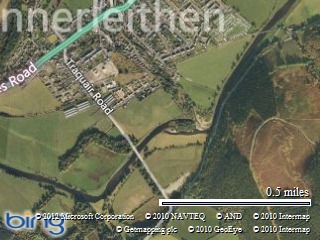
Map picture

Wednesday, 15 August 2012

Gracie Update

Well here we are at about 11 weeks, decided to get away for a week in the caravan

We still have one small problem now at 15weeks
Her Bladder Still Isn'’t Connected to her Brain Full Time Yet, Sometimes…….
She tiddles, gets a smack and is put outside
She’s learning…..She tiddles, and goes outside before you can catch her for the smack

Tuesday, 10 July 2012

The New Edition “Our Gracie”

Did I really want a puppy, not really, until…………………………IMG_0559-copy

Friday, 25 May 2012

Out & Around Windermere

Buried deep in a wooded valley of the Lake District, Stott Park is one of the few remaining examples of a type of mill once common in Lakeland. The bobbin mills drew on the natural resources which the area had in abundance - fast-flowing streams for power, and woodland - to produce in huge quantities the bobbins that were essential to the highly mechanised spinning mills of the Lancashire cotton industry
Near to the Lake District in Cumbria, this extensive working mill was begun in 1835 to produce the wooden bobbins vital to the Lancashire spinning and weaving industries.
Although small compared to other mills, some 250 men and boys (some drafted in from workhouses) worked here over the years in often arduous conditions to produce a quarter of a million bobbins a week.
Find us here

By far the most interesting visit of the week, a superb and detailed guided tour brought the past to life

Graythwaite Hall Gardens deftly illustrate the genius of Thomas Mawson. Commisioned in 1896 he was instructed to utilise the existing contours and landscape to make a garden combining the formal and informal.

It is essentially a Spring garden settled in a wooded valley of twelve acres exhibiting an extensive collection of rhododendrons and azaleas. It is much as Mawson finished it although the modern era now offers a greater selection of hybrids and species.

.

The Dutch Garden and Rose Garden are typical of the period and visitors can explore the paths through lawns and woodland to gain contrasting views of their surroundings. Towering above are some impressive trees, now giants sheltering smaller ornamentals and the Dogs cemetary and arboretum are havens of peace